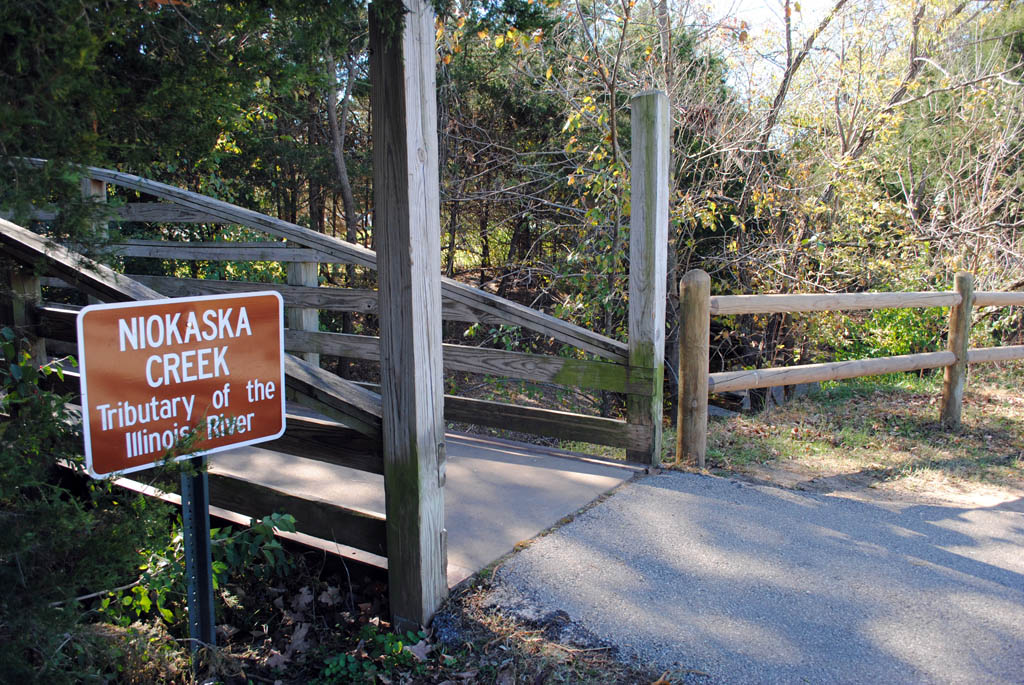
Council passes streamside protection ordinance

Photo by Todd Gill / Enlarge
Niokaska Creek at Gulley Park in Fayetteville

After nearly six hours of public comment, the Fayetteville City Council passed a streamside protection ordinance shortly after 11:30 p.m. Tuesday night.

The measure will limit certain activities within 50 feet of local streams in an effort to prevent runoff and erosion from causing harmful nutrients to enter area waterways, some which lead to sources of drinking water.

Arguments against the ordinance came from some of the roughly 1,300 residents who own property near Fayetteville’s streams. Although all existing uses of property are grandfathered in under the ordinance, there were still many residents who expressed concern over local government placing restrictions on the use of their property.

It is my hope that other communities will enact some version of this ordinance, but it is also my belief that none of them will ever do that unless Fayetteville does it first.

— Ward 3 Alderman Justin Tennant

Some of those in favor spoke to the ordinance’s potential to protect against property loss from flood damage and erosion, as well as the possibility that it would help increases the diversity of local wildlife and improve the quality of drinking water.

Bill Moeller, who lives near Razorback Stadium, told the council he was all for the passing of the ordinance. He said that problems caused by an underground stream that undermines the foundation of his house, could have been prevented if similar measures had already been taken.

“If this ordinance had been passed and if it applied to underground streams 50 years ago, I wouldn’t have that problem today,” said Moeller.

Ward 3 Alderman Justin Tennant agreed and said although the ordinance isn’t perfect, he’s proud to be a part of a council that is willing to act now.

“We could delay this for a few years,” said Tennant. “We could also put this thing off for a generation, but the problem with that is I don’t want to go to my son in 25 years and say ‘Look son, guess what you get to deal with.’”

Tennant said he believes it is paramount that we take care of our water and that as a thought leader in the state, Fayetteville is the perfect city to take the lead on streamside protection in Arkansas.

“It is my hope that other communities will enact some version of this ordinance,” said Tennant, “but it is also my belief that none of them will ever do that unless Fayetteville does it first.”

The ordinance passed by a 7 to 1 vote. Ward 3 Alderman Bobby Ferrell cast the only ‘no’ vote.

Prohibited Activities

  • Grading, dredging, dumping, filling, or similar construction activities
  • Landfills, junkyards, salvage yards
  • Clearing of non-invasive woody vegetation
  • Storage of hazardous materials or chemicals unless within waterproof containers and within a structure
  • Parking lots
  • Buildings and accessory structures with a building footprint larger than 150 square feet
  • Parking or storage of motor vehicles
  • Septic systems and/or lateral lines
  • In-ground swimming pools
  • Animal feedlots or kennels
  • Housing, grazing or other maintenance of livestock
  • Land application of biosolids

» View a fact sheet with pros and cons on streamside protection ordinances

145 Comments  

Fayetteville Flyer doesn't necessarily condone the comments here, nor does it review every post. Read our full policy.

  1. InPelWeTrust says:

    Would construction of say approximately 10 miles of impervious trails along stream tributaries violate this new ordinance?

  2. To far says:

    This administration has gone way to far this time. Who needs property rights anyway? Vote out our puppet mayor and his right hand man. Vote out everyone on the council who voted for this. Enough is enough, Fayetteville is becoming an almost impossible place to live unless you are an ultra left whack job who was educated at Berkeley and lived in a tree for a year.

    • denise chandler says:

      you are exactly correct. however, i do believe the mayor voted against the measure. don’t quote me on that though.

  3. David Franks says:

    To [sic] far–

    Here is an article, with comments, from the Fayettevillage Voice:
    http://tinyurl.com/49w7etl
    The post from the lawyer (Anonymous– March 1, 2011 3:47 PM) is pretty good, as far as it goes, but as I point out, there are several questions that must be answered before the extent of a “taking”– or whether one has occurred– can be determined.

    If streams are considered to be a part of vital infrastructure (and there are good reasons to do so), then this ordinance is no more a taking than the easements under power lines and over gas or water lines.

    Property rights come with property responsibilities.

    • Michael says:

      Property owners get compensated for the easements, and unless I’ve missed it there is no compensation to property owners in this bit of legislation. Just a couple middle fingers.

      • David Franks says:

        Hmmm. I’ve never heard of a public or private utility compensating a property owner for not being able to put a garage or garden shed under a power line or on top of a gas line. Apparently the availability of the utility is usually considered adequate compensation. Every subdivision plat I’ve ever seen sells lots by size, accessibility and view, with no consideration given for the area given over to easements. Existing improvements are usually grandfathered in when utility easements change (as is the case here), but in those cases, the utility is relieved of liability for private property in easements damaged by utility work.

        As I understand it, cities also change setback requirements in existing neighborhoods from time to time, without compensation to the property owner.

        • michael says:

          Actually it’s common for property owners to be compensated for loss of usage of their property when utilities are to be relocated or newly installed. It’s no where near fair market value, but it’s better than nothing and definitely better than the alternative if you decline their offer which results in condemnation of the land the city wants.

        • David Franks says:

          That is true– thank you. However, the streams were already in place when the adjacent properties were acquired..

          I don’t know if it is the case in Fayetteville, but n some cities, property owners are charged when sidewalks and even streets adjacent to their property are repaired or improved. If this is the case in Fayetteville, if the streams are considered infrastructure, and if the streams are improved by the effects of the ordinance, then perhaps property owners should pay for the enhancement to their properties.

          It could be a wash– maybe no money should change hands.

      • denise chandler says:

        yep

  4. burgerboy says:

    I get the need for an ordinance, but 50 feet seems like a really large easement. Maybe something like 20-30 feet would have prevented erosion without affecting so much property in town. I wonder how this will impact future infill development in established areas. I also don’t understand how most of the city trails would exist with this ordinance in place five years ago. The entire Scull Creek trail violates this ordinance.

    • David Franks says:

      Fifty feet seems extreme to me as well, but thee might be a reason for it. I wonder if the city carried out a study of topo maps and/or a survey of the streams.The simplest easement to understand and enforce is a uniform distance from a centerline, which works well for utility easements where the required clearances for maintenance and repair are known. An easement related to an elevation line or a percent of slope would be more appropriate, but very difficult to understand, delineate and enforce. They might have hit upon a distance that encompasses the widest necessary protection; if this is the case, I would hope that the city had enough information on streamside conditions to justify it.

      I wonder if it would be possible or practical to use instead a set of standard easement widths (say, five-foot increments from twenty-five to fifty feet), based on conditions at each property. This would minimize the effect of the ordinance on property owners, account for greater or lesser impact from paving, slope and plantings, and give the city the opportunity to do a comprehensive assessment of conditions along each stream.

      It might also be possible to institute an easement abatement program, in which an easement could be decreased if a property owner installed a properly-designed “rain garden” or other drainage-retarding landscape feature.

    • denise chandler says:

      you are correct

  5. jcentennial says:

    Great documentary if you want to learn about the effects of stormwater runoff/impervious surfaces on ecology systems (that ultimately affect you): http://www.pbs.org/wgbh/pages/frontline/poisonedwaters/view/

    I think it’s on the second half of the documentary.

  6. Momma said.... says:

    My mother’s modest yard is now being over regulated by the city. I would be OK with that if the city would not have allowed an entire subdivision directly on the other side of the creek to drain freely. The street curb turns into a water slide straight to the creek for about one hundred lots. No buffer, no nothing.
    Why can’t the city fix the numerous MAJOR drainage design errors from years past BEFORE sticking it to the little guy? Just a thought.

  7. Yo Momma says:

    Tell yo’ momma to do exactly what the city is doing…….. nothing. It’s all talk from the city. That is until the city starts walking the walk! They have streamside property too, ya know!!!

  8. tannshepp says:

    YAY! We have the best city council! I am so proud to live in Fayetteville!

  9. burgerboy says:

    I wonder how this ordinance would stand up if a group of property owners got together and sued the city.

    It seems that the city would have a hard time winning, given that they don’t even follow their own ordinance. Anyone with a camera and 15 minutes to walk a city trail could have about 50 pictures of the ordinance being violated on city-owned property.

    • David Franks says:

      Existing improvements within the easement are grandfathered in, so existing trails would not be a problem– at least as they relate to the ordinance.

      • denise chandler says:

        not really true. the dozens of saplings i cleared after i bought my house from foreclosure would have fallen under the “woody vegetation” clause

        • David Franks says:

          The ordinance includes a 12- to 24-month grace period within which discontinued uses may be resumed, so if your property was on the market for less than one or two years, restoring open area would have been allowed.

    • denise chandler says:

      as 40/29 showed friday night and anyone can see from my backyard. all we are asking is that this issue be put on the ballot

  10. Daniel M says:

    I think this ordinance will have minimal effect on the problem it is advertised as being a solution to. The phosphorus in Beaver Lake and area streams comes mostly from the rural areas out of town- Fayetteville’s contribution from the land affected by this ordinance doesn’t amount to much. There is probably much more phophorus in the runoff from the streets, parking lots and rooftops than streamsides.

    The use of variances to allow certain uses is an invitation for abuse of power by those making the decision out in the field. I would imagine that if a landowner is seen as a pro-ordinance individual they will get preferential treatment while a “evil” developer would be denied in the same situation. It just seems this is aimed more at controlling land use and discouraging growth rather than an attempt to remedy a pollution problem.

    • burgerboy says:

      Well put. I also view this as anti-development more than anything.

      • David Franks says:

        How many of the properties affected by the ordinance are big enough to have any kind of “development” on them? (That is, large projects by developers?) We already know that developers screw up drainage and runoff, as cited above; the ordinance might strengthen the ability of the city to hold developers to some standards for runoff and drainage control on those properties. Are you going to complain about bad drainage, or are you going to give the city more tools to address the problem?

        • Daniel M says:

          This ordiinance affects all development projects alongside streams regardless of their size. Instead of adding more regulation the existing regulations should be enforced more. Simply adding more rules isn’t going to change things- if someone wants to break the streamside ordinance they will and chances are no one is going to call them on it. It’s primary effect is to give developers of any size another hurdle to jump over to build anything in Fayetteville. It will drive up the cost of buiding in town and so the cost of home ownership. IInstead of wasting time on this ordinance the city should be looking at ways to bring business to town and increase the tax base. Their priorities are misplaced.

        • David Franks says:

          So what you’re saying is, developers would rather not develop than be responsible as they go about it, or they’ll do everything they can to avoid or ignore laws, or both. Do you think the city should cater to every business that works this way?

          Doesn’t the city have to go back ad redo drainage and retention ponds at poorly-designed and poorly-built subdivisions? Have you seen the photos that aubunique posts?

          That costs us, too.

        • Daniel M says:

          No, that isn’t what I’m saying at all. Your first statement plays on the popular image in Fayetteville that all developers are the bad guys and that just isn’t true. All development within the city’s planning area has to go through a rigorous review before, during and after construction. To place all blame for any problems on the developers ignores the city’s role in the process. If projects are poorly designed or poorly built why did the city approve them? Adding another layer of regulation isn’t going to help enforcement of what is already on the books.

          As for this ordinance showing Fayetteville as a leader in NWA- why don’t we put our efforts into leading in job creation, sales tax revenue increases, reduction of building vacancies, improving our business climate, etc.?

        • denise chandler says:

          every property on my street..and many more. they are not just limiting “large projects”..they can say it all day long. it’s simply not true

        • David Franks says:

          The word “development” as used in the comment I replied to referred to large development, not to the improvement of individual properties, Calling this ordinance “anti-development” is simply untrue, even if you say it all day long.

          Perhaps you should have read this thread through– and more carefully– before you started peppering it with your responses.

  11. Don't you know says:

    Fayetteville is anti-development.

    • David Franks says:

      Yeah, the SouthPass, Ruskin Heights, Aspen Ridge and Renaissance deals, plus the miles of black-shingled resource heaps along Fayetteville’s once picturesque roadscapes amply prove your point. I believe it is the economy that is anti-development– for the moment. If only Fayetteville were as anti-development as the lessons teach…

  12. burgerboy says:

    Does this mean that trail construction in Fayetteville is halted? Many of the planned trails are alongside streams. What about the planned extension of the trail north of the mall? What about any of the trails that might have to cross a stream? This seems like such a useless and cumbersome ordinance.

    • David Franks says:

      I would expect that any trails alongside streams should be built of porous material, or designed to drain away from the stream into rain gardens or some such feature. Of course, trails are part of the public transportation system, so I don’t know if they will be required to follow the ordinance. The city hasn’t always treated streams well in terms of trail siting and construction; I hope this ordinance signals an improvement in city policy in that regard.

    • denise chandler says:

      thank you!

  13. Ozark Nature says:

    Thanks to the seven members of the Fayetteville City Council who voted for the ordinance and to Mayor Jordan who spoke so eloquently in favor of it! And special thanks to Council Member Lewis and her Environmental Action Committee members who worked so hard to bring this bill forward. City staff deserves thanks, too, for their excellent work in planning, engineering, legal research, community outreach and other areas.

    This ordinance finally puts our city on the map of local governments addressing stream and water quality management. It’s embarrassing that we’re the only municipality in the entire state that is doing this but I predict that within 2 years we’ll have Washington County and one or more Benton County local governments on board, and hopefully other counties in the state.

    Arkansas’ best asset is its water, and we can’t afford to waste it.

  14. OffCamber says:

    Some of the ordinance adopts common sense, like hazardous material storage and not building parking lots next to streams. Other parts bind individual property owners to regulations the city hasn’t even followed.

    A person can’t park a car, remove a tree, or build anything larger than a small outbuilding within a sizable and arbitrary area. No judgement or concern is made for the actual runoff impact. Individuals should be free to improve their property if the impact is no different that a lot not bordering a creek. Remedy problems, not take away rights.

    There are good intentions at play, but little regard for individuals and their freedom to use their often hard-earned property. Even if this only affects a fractional number of city residents and scenarios, it’s too many. They should not be thumbed at the expense of corralling reckless development.

    This ordinance lacked polish in its quest to make an ideological stand, a common trend in Fayetteville City council over the last few years.

  15. Pass the mustard says:

    Is it the city that puts up the signs that show the creek name and flow direction (Illinois vs. White River)? If yes, will they put these signs on all the creek crossings? These are welcome, but some crossings are still Anon.

  16. Festerville says:

    Why oh why do you folks assume that our fair City is going to enforce
    ANYTHING against the 6000 lb elephant in the room: large-scale developers.
    Having done no research whatsoever, I would bet that there already are (certainly at the Federal
    level) regulations on the books concerning waterways.
    Can anyone give us one example of a developer greatly inconvenienced, much less taken to court
    for drainage issues? In the last, say, 20 years?

    • burgerboy says:

      This reminds me of the last time Lindsey had to take a project to the council.

      Half the (mostly the older) alderpersons seemed star struck and in awe of their football hero.

      It was creepy, and Lindsey built another massive, craptastic apartment complex with little resistance.

  17. Pass the mustard says:

    If I’m not mistaken, several of the folks voting for this supported or voted at one time or another for SouthPass (how about those “canals”), Mountain Ranch (talk about water), Ruskin Heights, every prairie wetland subdivision west of I540, and raised no objection to a Planning Commissioner’s statement that Festerville the City wants “commercial all the way to Farmington”. There were over 100 “stream crossings” for the speculation driven West sewer plant. Will there be enough resolve for enforcement against the big people?

  18. Concerned citizen says:

    For those who oppose the stream protection ordinance, we are starting a petition for a referendum initiative to bring the ordinance before the entire city population for a vote. This refenendum is supported by ammendment 7 of the Arkansas Constitution and will require 3,928 signatures. Please email The Concerned Citizens for Fayetteville Property Rights at fayettevillepropertyrights@gmail.com.

    Let’s let our citizens have the final decision!

    • Daniel M says:

      40/29 TV news had a short piece about this on their 10 PM news but when I look at their website there is no story on it. There isn’t anything in the local newspaper about it. Our news outlets are letting us now.

      Coonsidering there are 1,300 property owners directly affected by this ordinance and many future owners that will be adversely affected it shouldn’t be too hard to get the signatures required. Sign me up!

  19. mpetty says:

    Hello everyone, I’ve been watching this comment thread closely, and I wanted to chime in and clear up some misconceptions that have been frequently repeated.

    The first is that this ordinance does not create easements. Some of you may think this is a technicality, but it is an important one. In an easement, the city or a utility has the right to install infrastructure on private property. This ordinance comes with no such right. However, like easements, it does restrict certain activities from taking place within the riparian zone.

    On the subject of city trails, all of us at City Hall admit that we’ve made mistakes in building the trails in certain locations. That’s why this ordinance puts the same restrictions on the City as it does property owners when it comes to building a hardscaped path in a riparian zone. Before building a trail or driveway in the zone, the City or the property owner must examine all other feasible options to avoid doing so. If there are no other feasible options, then the ordinance treats the City and property owners equally and allows the installation of a 12ft-wide hardscaped path.

    Thirdly, it is important to remember that ALL activities currently being performed in the stream areas are grandfathered in. Not one of the affected properties is going to be forced to stop what they are doing now. This ordinance is intended to stop the trend of increasing nutrient load in streams as it relates to our population growth. As such, these new rules will go into effect on each of these properties when an application for a development or building permit is approved. A variance process is included in the ordinance to allow justifiable exemptions, such as the building of a sunroom or deck. In those cases, owners may be required to commit to best practices when adding to a structure, such as planting native vegetation to offset the construction of new impervious surface.

    Finally, the decision to craft this ordinance using a 50-foot buffer was not arbitrary. Far from it, this part of the code received extended scrutiny from our staff. The studies we used to justify the ordinance, which are peer-reviewed and published by respected research institutions, demonstrated benefits for riparian zones up to 300 ft from the center line of a stream. We chose to use 50 ft because the research showed that the majority of the benefits of a protected riparian zone occur in that 50 ft, and we concluded that 50 ft struck the appropriate balance between what was necessary to get the results we wanted and what we were asking of property owners.

    Also, I wish anyone luck when they begin collecting signatures for a ballot referendum. On this issue, I’m convinced that Fayetteville will support the Council’s decision if this is put on the 2012 ballot. If we are litigated against, I’m even more convinced that our Attorney’s opinion – that this was a legal, constitutionally supported ordinance – was well-reasoned. I welcome the opportunity for our democratic process to decisively establish public support for the Council’s action.

  20. Concerned citizen says:

    I disagree that citizens will agree with the city council, but that is the beauty of the process that we have at our disposal. We will work to get this on the 2012 ballot and if we loose, we loose. However, citizens are just now learning what this will mean to their property and are very concerned. The continual use clause that is part of the grandfather section states that at any time a continuing use stops, the use that was grandfathered in ceases to exist. So, with just 30 days to get the signatures we need, we will have to work very hard. I am committed to this as are the many people that I have heard from in the 2 days that our organization has been in existence. Even though we disagree, I believe we can all respect each others involvement in the political process. The process is in place to provide a voice for those that wish to be heard. Email fayettevillepropertyrights@gmail.com if you wish to join our cause!

  21. Johnny Twotimes says:

    Exercising the petiton process is refreshing. Citizens in most towns would just sit there and take it.
    You have my signature, now get a facebook page or something and educate me. Really.
    They have there platforms, get one too. Good Luck.
    One word of advice: don’t get all super “rightwing” or you will lose us normal people.

    • denise chandler says:

      your comment made me chuckle..he is so far from “super right-wing!” he just doesn’t want 8 people telling the rest of us what we can do with the property we pay for..let’s get it on a ballot!

  22. Concerned citizen says:

    The Facebook page is coming as well as education. Right wing or left wing will never be our goal. We are just honest people wanting to protect the things we hold most valuable. Thank you very much for the honest post from another concerned citizen!

  23. Concerned citizen says:

    We forgot to say, “well said!”.

  24. Daniel M says:

    The grandfather clause in this ordinance is a joke. It will make it much harder to sell your property when you have to tell prospective buyers that they are restricted from using 50 feet of the property. On a 150 feet deep lot that amounts to a third of the property or basically the entire backyard. Disclosure rules dictate that you tell buyers about this ordinance so you won’t be able to get around it by not doing so. If you are looking at selling your property you better do whatever you need to do to stage it now because you won’t be able to later. The only recourse now is to get behind the Concerned Citizens for Fayetteville Property Rights drive and overturn the ordinance.

    • mpetty says:

      That’s not true, Daniel M. The uses are grandfathered in, even when a property changes hands. It’s not until a current use has ceased for a specific amount of time (12, 18, or 24 months depending on the lot size), that the grandfathered status is removed.

      That means if you mow to the edge and you sell your house, the new owner will be able to keep mowing to the edge.

      Those who make misinformed and incorrect statements would do well to learn what the ordinance actually does before spreading propaganda.

      • Daniel M says:

        It’s true that I didn’t qualify my statement with those time frames but as you noted it is true that the grandfather status will be removed. My statement is true and the ordinance will have the effect that I stated. A new property owner will still have to deal with the restrictions this ordinance places on them and present property owners will have to disclose this information. Normally a new property owner will change and improve their new place to their tastes and this ordinance will restrict that freedom.

        • David Franks says:

          A home buyer will first try to buy a property that suits him as it is. Few home buyers have the money to buy an unsuitable older home and improve it to their needs, and banks aren’t going to lend the money if the resulting property value doesn’t support the cost of improvement. How many of the affected properties are so lacking in additions and exterior improvements that this ordinance will have as much of an effect as you claim it will? How many of these properties, being located adjacent to a stream– likely a highly-exploited amenity in terms of home pricing– would have enough headroom in their value to allow major improvements?

      • denise chandler says:

        my property sat, empty in foreclosure while dozens of saplings took over the yard. this ordinance would have prevented me from clearing them

    • denise chandler says:

      our thoughts exactly!

  25. to petty says:

    On the subject of impervious surfaces, I have wanted to redo my 1960s severely damaged concrete driveway–a real eyesore at the front of my house. Wanted to tear it out and install a permeable grid that allows grass to grow up through it-or some other suitable attractive permeable surface. Was told by the City that there’s a requirement that several feet (8 i think) at the end of all driveways where it meets the street must be concrete only, supposedly to control storm water run off. So I’m stuck with having to pour another concrete drive when what I really want is a more eco-appropriate alternative-which btw I don’t think would hamper but rather alleviate some storm water run off.
    Mr. Petty, are you aware of this and do you think it could be subject to a variance? thanks!

    • mpetty says:

      I’m not aware of any position staff has on the last 8ft of driveway. If you’ll email me at citycouncil@matthewpetty.org we can discuss your driveway in more detail.

    • David Franks says:

      Curb cuts and aprons (the part of driveways that is in the right-of way) are generally standardized features of the city street and storm drainage systems, so the city has some interest in keeping them standardized. Since the apron is sloped– in the case of six inches in eight feet– a permeable surface wouldn’t keep much water out of the storm sewer, but any grass growing in it (if you go the Grasscrete route) could trap debris and cause a drainage problem.

      If you really want a permeable driveway, why would having a concrete apron stop you?

    • David Franks says:

      My post above should say, in part, “in the case of six inches in eight feet, 6.67%”.

    • denise chandler says:

      good luck with that whole variance thing!

  26. to petty says:

    Just think it would look better to have a continuous same-material surface. Don’t know about grasscrete but anything that gets chronically clogged up wouldn’t exactly meet the definition of permeable. There are entire parking lots engineered out of the plastic grid I have in mind. But in any case cld it be worse than concrete in terms of runoff ? Certainly wouldn’t want anything that would create a washout situation into the curbside drainage path.

    • David Franks says:

      If a sidewalk crosses your driveway, it will interrupt the pavement anyway. If you live on a street with curbs and gutters, every property should have a paved apron, so from the street, your driveway would look better with the same, with or without a sidewalk. It might be worth your while to see if the city would let you put your house number on the apron, using tile, stone, contrasting concrete, or inset metal numbers.

  27. burgerboy says:

    This will discourage people from investing in their homes in Fayetteville.

    I have often thought about buying a smaller house in the downtown area, and fixing it up, adding onto it, and improving the property over time as my budget allows. If that property is adjacent to a stream, the improvements that can be made are minimal.

    I like the intention of this ordinance, but I view it as overreaching and misguided. I would support the city attempting to re-establish a riparian buffer zone adjacent to all streams, but not in this manner.

    If there’s a referendum, I’ll vote for repeal.

    • David Franks says:

      “This will discourage people from investing in their homes in Fayetteville.”
      Even people who don’t own property adjacent to a stream? That’s just plain overwrought.

      The effect that the ordinance will have on the ability to fix up, add on and improve a property will vary from property to property, and the effect will be zero on properties that are not adjacent to streams. If anything, the ordinance will cause a dramatic upswing in fixing up, adding on and improving their property, as owners who don’t have property adjacent to streams tart up their properties just to twit those whose properties are adjacent to streams.

      I’m going to build a gazebo and a fire pit.

      • mpetty says:

        Bottom line: if you trust population projection numbers and the science of our streams and Beaver Lake, new development shouldn’t happen along streams. So does this discourage new development along streams? Absolutely, and that is exactly what the science demands us to do.

        Even a cursory review of the research shows this to be true.

        • burgerboy says:

          Such an easy choice for a man who doesn’t own property.

        • David Franks says:

          Neither impugning the person who relies on data nor disliking the data invalidates the data. I would think that renters would have more at stake in this than property owners because when this ordinance discourages people from investing in their homes, it will be an even greater barrier to converting properties to rentals, which will decrease the relative number of rentals and increase rents.

        • mpetty says:

          @burgerboy – That’s such an easy straw man to raise for a person who hasn’t studied the ordinance or the science behind it.

          There are six property-owning Council members who voted for the ordinance, too. And we had a substantial number of affected property owners tell us they supported the ordinance as well.

          The truth is that people who own affected property, own unaffected property, or don’t own property at all come down on different sides of this ordinance. Your opinion is clear and valid, but holding up straw men to support your argument only convinces me more that you’ve rushed to judgement before studying the science or the ordinance itself.

        • Morgan says:

          Let’s say you are correct and rents increase as a result of this ordinance (which is a huge stretch I think). I would guess average rent in Fayetteville is $1000 so we could safely put a rental increase of 10% at $100 a month or $1200 a year but for arguments sake lets double that to $2400. The median home price in Fayetteville is approximately $153,000. I would guess 10% is again a fair number when guessing at the decrease in property value for a property owner that has just lost the ability to make full use (or nearly any use) of their entire property within 50′ of a stream but for arguements sake lets put it at 5%. The property owner sees a decrease in value of $7650 a year. By my math the property owner is the clear loser. Care to expand upon your assertion with some math to show how you came up with your hypothesis?

        • David Franks says:

          Morgan–
          My argument is in much the same vein as the contention that “This will discourage people from investing in their homes in Fayetteville”: not supported by facts or logic.

          However, your math is incorrect. The homeowner, should his property lose value (and there is as much evidence to support stable or increasing value as decreasing value), “loses” $7650 only once, and only if he sells his house, and only if he sells his house before the market has time to normalize this perceived change in value. (Normalization in the market is possible because there is no guarantee that a property will appreciate in value, and there is no guaranteed rate at which it might appreciate.) Even if the property loses value, when the loss is amortized over the time of ownership, the amount added to the cost of ownership per month might well not push the cost of ownership beyond the cost of renting. For example, if your hypothetical owner sells after seven years of ownership, his additional cost is $91.07 per month. In the meantime, if his easement-encumbered house has appreciated in value in value over time, appreciation could well overtake the “loss”, and the property owner will have lost nothing. At only 1% annual appreciation, the property regains that 5% loss in value in six years.

        • mpetty says:

          @Morgan and David – Why argue hypotheticals when data regarding how similar ordinances in similar communities has affected property values is available for your perusal? All you have to do is email the City and ask for it.

          When you look at it, you’ll see that creekside properties will continue to command a premium.

        • burgerboy says:

          Petty I was drunk when I posted that last comment. Just trying to rile ya up.

          And I haven’t read the science or studies about it. You are right.

  28. Barney says:

    http://gis.accessfayetteville.org/website/flood/viewer.htm, I know a dude that’s property was put in the Fayetteville flood zone..it’s a nightmare..for his family.Many homes in Fayetteville was put in this zone by FEMA.and ruined the property values.. the Insurance is crippling..Lindsey has damned this creek up for the water ‘Paradise Valley Golf Course”.. and it has ruined the creek bank.I wonder what “Chemicals” wash into the stream from his Golf Course.
    Aunt BEE call the man…

    • Johnny Twotimes says:

      The golf courses are “grandfathered” in, remember. So, it’s business as usual with heavy chemicals routinely applied next to Mud Creek, Clear Creek, etc. All the bad that is happening can still happen with no recourse. The more I research, the worse this ordinance smells.
      They needed this ordinance so the city can try to convince the EPA to be laxed in relation to the overall levels of nutrients the wastewater plant dumps in the Illinois and White Rivers. The city is actively lobbying in Washington DC right now for less regulations. All this ordinance is doing is giving the city another lobbying point for less regulation.
      I understand everyone’s water may cost more if we get into anymore trouble with the EPA. But to put the burden on the backs of existing property owners is not fair. Especially when existing stormwater infrastructure is doing the most damage. That would cost money to correct those mistakes, the ordinance was cheaper and easier for the city.
      “Hey EPA, look how we stuck to the property owners in our town, they will do the work we don’t want to, now give us a break on our nutrient levels.”
      Not very Fayetteville if you ask me.

      • denise chandler says:

        yep..that’s the way i see it. my property is alongside a creek..and city council just screwed me

      • mpetty says:

        @Johnny – You’ve told a half-truth and used it to misrepresent what is actually happening. The intent of this ordinance is to stem the increase in nutrient load as it relates to our population growth. That means we are shooting for a decrease in the per-capita nutrient load over time. As such, when a new building or development permit is applied for, the law will go into effect for that property.

        So as our population grows, the nutrient load in the streams will go down, and that is clearly not business as usual.

  29. Morgan says:

    I am more worried about further erosion of individual property rights than I am the streams. I couch that with the fact I am currently stuck in a tiny town in Australia due to flooding which is apparently a frequent occurrence here in Queensland. At this point my suggestion might be to damn up all the streams and rivers everywhere. Ugh. Seriously though, I don’t support this later overreaching ordinance and will happily sign my name in support of a referendum for repeal.

  30. Concerned citizen says:

    Thank you to all of our supporters! The public response we have received is more than we could have ever expected in just a few short days! Fayettevillepropertyrights@gmail.com

  31. burgerboy says:

    I still hope this is repealed, and re-worked into something more site-specific. I think about some of the midtown properties that we’d all like to see renovated or re-developed. I worry that some of those will forever have to remain underutilized because of this broad ordinance.

    What about redevelopment of lots downtown, specifically near Dickson? Some of those properties are over top of streams. Even if the streams are never daylighted, could any kind of development ever take place around there under this ordinance?

    I think when you are talking about removing property rights like this, the city needs to be extremely flexible and look at each and every property individually. We’re told that there aren’t many properties impacted by this, then it should be no problem for each property (the “few”) to be evaluated independently.

    I’d prefer guidelines rather than hard and fast rules, like 50 feet.

    It seems to me that many of the city’s stated goals, like infill and redevelopment along certain corridors, could be impacted negatively by this kind of ordinance.

    I guess I worry because I know how anti-development a lot of the louder voices in Fayetteville can be. They want NO development, and so I fear some good development gets thrown out in the process of stopping anything new from happening in Fayetteville. I can see this ordinance being used to stifle growth and infill in Fayetteville, and that has me worried.

    • mpetty says:

      Those are all valid concerns…

      …and the ordinance addresses them. You really should study it before rushing to judgement. There’s a difference between the first 25 feet and the second 25 feet, and the ordinance relies heavily on the Best Practices Manual, which provides exactly the guidelines you are asking for.

  32. kvnbbn says:

    What happened is… Beaver Water District was going to challenge our wastewater permit with the state unless we did something. The city looked for the cheapest why to get out of reducing total phosphorus load out of our water treatment plants and a consultant suggested the buffer zone. The city chose to use this ordinance to get a “get out of jail” card for the next 5 years or so until our permit is up for review again. If you read the memo and documents between the Major and city planner the phase “no cost to the city “ is used very often.

    So, I ask 3 questions…

    1. If it didn’t cost the city… Who got the bill?
    2. What happens next time we need our permit for wastewater and we don’t address the problems with the current system?
    3. Is this really a victory for water quality?

    • Daniel M says:

      I’ll give it a shot…

      1. The property owners are getting the bill- this ordinance is like the exercise of eminent domain without the compensation to the property owner.

      2. The same people that gave us this ordinance will come up with another way to stick it to the little guy.

      3. No, it will have minimal effect on the phosphorus levels because most of the phophorus comes from the rural areas out of town.

      This ordinance is more about the image of being pro-environment rather than actually making a difference. It is a way for the anti-development elements in the city to squash future growth without being straightforward about. They have taken the opportunity afforded by the economic slowdown to push this through. They thought no one would fight it but are finding out differently.

  33. CLH says:

    I have a friend who lives on a lake that adjoins Stonebridge Golf Course. His backyard has been basically put off limits by this ordinance, yet the golf course will continue to dump tons of fertilizer, herbicides, etc. that will run into the lake he lives on. So yea, this ordinance is just window dressing that appeases the small brains in our town.

  34. kvnbbn says:

    DM, You got an A on this Fayetteville Civics class pop quiz!!!

    Mr. Petty

    Care to take a turn answering the questions?

    Thanks,
    Kevin

  35. ArkInvestor says:

    Economics refresher: If two weeks ago there were 1000 things you could do on your property and now there are 999, that property is de facto less valuable.

    Now, there may be a social benefit from improved water and stream side land protection that outweighs the value decline from loss of use. That is clearly the opinion of our elected leaders. I disagree, and obviously so do many others, and that’s why we have petitions and elections.

    But please don’t tell these affected property owners their property is just as attractive and valuable now as it was before passage of this ordinance. That’s disingenuous.

    • David Franks says:

      If all properties in an area have a potentially harmful use prohibited within the last two weeks, then they are all de facto more valuable. For example, your property becomes more valuable if your neighbor suddenly is not allowed to put an asphalt plant on his property, then your property is more valuable, even if you might at some point have considered putting an asphalt plant on it. (I use this example because in lovely Wichita, Kansas, asphalt plants are allowed under every zoning classification.) Reducing the apparent encroachment of adjacent or abutting properties makes them all more valuable.

      Do you disagree based on your gut feeling, your knowledge of Economics 101, or having looked at the material mentioned by Mr. Petty?

      Ultimately, the market value of your property doesn’t change until you sell it. If you’re not selling it, there is no market value.

      • Concerned Citizens for Fayetteville Property Rights says:

        I think that the impact of values when you are trying to sell is a paramount concern to our citizens. If a potential home buyer wanted a pool and a paticular home did not have a pool and one could not be built becuase of the ordinance they would not buy the home. However, if a house was for sale a few doors down that already had a pool, this house he may consider purchasing. This makes the house with the pool more valuable and the one where he cannot build one less valuable. Thus, this ordinance has devalued the home where a pool cannot be built and reduced its potential to be sold. In this economy, our property owners cannot afford another reduction in their home values.
        Our homes are the most valuable investment we ever make. As to asphalt plants, this is controlled by zoning and is not something that we would want to do in our residential areas.

        • David Franks says:

          Very few people who want a pool are going to buy a house without one– there are too many houses around that already have pools. A house with a pool is less valuable to many buyers. No house in the world has all the features that every buyer wants. No property adjacent to a stream is the be-all-end-all of properties, and this ordinance is not going to change that. Check comparables on these properties, feature-for-feature. The reason that these properties are more valuable is because of their adjacency to a stream; this ordinance is designed to protect that amenity, and in the real world of residential real estate, that will give it more value.

          RE “Our homes are the most valuable investment we ever make.” A home might well be the most expensive thing you ever buy, but a home should not be considered an investment for the purposes of making money. A home is an investment in living the way you want to live, which has value. In calculating the return on investment, the value of living the way you want to, as well as any return on the cost of the property, must be subtracted from the amount you paid for it. If you bought your home strictly as a financial investment, you bought it for the wrong reason.

        • Concerned Citizens for Fayetteville Property Rights says:

          “No house in the world has all the features that every buyer wants. ” Continuing to use the pool as the example (not being the only example relevant). That statement alone contradicts your point. People buy in the area they desire. It should be the right of a person to determine the types of ammenities they can have in the area they want to live. Some people would buy a home without a pool even though they want a pool. Why do you think there are pool companies? Some people may not be able to afford it at the time but have a plan for the future.
          Furthermore, people do buy there homes for investment and living. Being able to resale your home and recoupe your investment is extremely important, especially in an area where there are many “Wal-mart vendor” types of jobs that frequently transfer people.

        • David Franks says:

          Anybody who buys their home as a financial investment has a fool for a financial advisor. We’ve already seen what happens to the real estate market when we put fools in control of it.

          Do you base your argument on being a real estate broker, or on having a fool for a financial advisor?

  36. Property Owner says:

    @ ARKINVESTOR I love the economic perspective! I have been following these comments very closely. Property values will be negatively impacted for those that live in close proximity to a stream. Contrary to the research that the city has done (which I have read and is very slanted), the impact on our property values will decline. This is not a metropolitan area where growth is so rapid that the results of an ordinance like this one will show results that can be actually realized in any reasonable period of time. In addition, Sarah Lewis stated in the March 1st council meeting that average property values in areas where similar ordinances went into effect raised the values of homes on average of around $2,000. That amount may indeed be accurate in areas like New York or even Kansas City. However, Fayetteville is not one of these large towns. Property owners that live around streams (or basically on streams) will not see a increase in their property values, but will see a decrease that will make the $2,000 increase that council member Sarah Lewis suggested even laughable. 50 feet of a yard on a stream in many cases may encompas an entire person’s yard in which case they may see 10s of thousand dollars in property decline. I do not care who you are or what you read, it is unlogical to suggest that restricting uses for a person’s entire yard will increase their value. Who really thinks like that?
    I’m sorry, but I am tired of hearing council members spread that propaganda. Adella Grey’s comment at the March 1st meeting argued that even though the council is asking these 1300 property owners to make the sacrifice this time, it could possibly be even her next time. Well, I don’t know about you, but that to me sounds like a confession of fact. This is a sacrifice, and usually to sacrifice something does not mean to benefit-like the proposterous increase in property values that Petty, Lewis and others are claiming. Rhonda Adams admitted that this was a sacrifice to property owners, even those like her dad who lives at the lake.

    Overall, I think that this would be easier on property owners to take if the council would just admit what they are doing. Placating to the EPA by showing them a pretty plan that will accomplish very little except get the regulators off of the city’s back for a few years-at least until the results do not happen. This ordinance is contradictory to what the Fayetteville city government is lobbying to achieve in Washington. The city is lobbying to increase the amount of pollunants that they will able to let get into the beaver and Illinois water sheads.

    Lets just be honest here. PROPERTY OWNERS WILL BE NEGATIVELY IMPACTED IF THEY LIVE ON A STREAM. The city just wants to dress this ordinance up in a nice suit so that people cannot see what it really is. I’m sorry Petty, but you are wrong.

    • David Franks says:

      The city is not lobbying to increase the amount of pollution that goes into the water supply; it has protested the change in standards for phosphate content in treated water. The change in standards will require several million dollars’ worth of alterations to an already-overpriced and state-of the-(existing)-art treatment plant.

      In real estate, amenities are amenities, and people pay extra for natural water features. The size of the market has nothing to do with it; the rarity of the amenity and proximity to it are the determining factors.

      Typing in capital letters doesn’t make your argument any stronger.

  37. Stream proximity says:

    Thank you! Someone willing to call out the council members on their crap! I am part of a group that has formed an exploratory committee to find challengers to every member of the council that voted for this ordinance. Even the office of Mayor is being considered. Together we can all make a difference in Fayetteville and bring our community back to the status of being freindly to both property owners and businesses.

  38. Concerned Citizens for Fayetteville Property Rights says:

    Our organization is currently circulating petitions in Fayetteville to get this ordinance on a special ballot vote in July. In addition, we have formed a coalition of property owners who are suing the city for damages associated with the restricted use of their property rights. For more information, please email fayettevillepropertyrights@gmail.com

    If we work together, we can make a difference.

    • David Franks says:

      A lawsuit must present an organized objection to this ordinance based on the assertions that it takes something, and that property owners should be compensated for that something. If you are going to sue the city, you will have to come up with compelling answers to questions such as these:
      – In what way have your individual property rights been taken away, restricted or harmed? What would the ordinance take away, restrict, or harm in your case?
      – What if most of the affected property owners could not show such an extent of loss, restriction or harm?
      – Isn’t natural drainage, unencumbered by development, actually part of a city’s vital infrastructure? (There are already ordinances in place that control how a development may affect drainage and runoff.)
      – Is any of the land area affected under this ordinance in a flood plain, which is already land that cannot be built on? (Loss of use to side setbacks, existing easements and flood plains reduce the impact of this ordinance.)
      – How does this ordinance compare to the granting of easements under privately-owned power lines or over privately-owned gas lines, which similarly restrict land use, but are primarily for private benefit and only incidentally for public benefit?
      – For purposes of calculating compensation, which is more valuable: the potential practical use of some partial square footage of a piece of land, or the actual aesthetic/amenity value of a cleaner, clearer, unencroached-upon stream?
      – Isn’t property more valuable when the neighbors’ outbuildings and other improvements are a little farther away? Don’t the losses in value in properties across a stream from each other cancel out because their values are thereby enhanced?
      — In light of the fact that laws change all the time with potential ill effects on property owners, does this ordinance make every reasonable effort to minimize the effects on current property owners?

      • Concerned Citizens for Fayetteville Property Rights says:

        At this time we will not publicly discuss the individual causes of action that we are considering, but they are valid and your ideas have already been discussed. In addition, no the city is not taking every effort possible to minimize the impact on property owners.

        • David Franks says:

          As I understand it, grandfather clauses are generally considered in law to be adequate for addressing the impact of a new ordinance.

          Do the property owners involved intend to repay the city for any compensation they might receive if and when their property turns out to be more valuable as a result of the ordinance?

  39. Property Owner says:

    David, let me ask you, what do you base your opinions on? You seem to have it all figured out. Also, let me ask, do you live by a stream?

    • David Franks says:

      I base my opinions on having been in real estate for thirteen years. My opinions are based on actual proficiency in assessing market value for real estate marketing, planning and valuing estates, and banking purposes, as well as understanding and responding to seller and buyer motivations. My opinions are rational rather than emotional, and they are correct as far as the real-estate market is concerned, so the fact that a stream runs adjacent to my property is not really relevant.

      • Property Owner says:

        David, my intention is not to devalue your opinions, but I do however disagree. I have an advanced degree in economics and business and I have worked for years with the real estate market through my work in banking and appraisals. You may indeed understand buyer motivations for your market, but your thoughts and opinions do not resonate at all with my particular buyer base or age group-Just a fact

        • David Franks says:

          Ah. Did you work in commercial or residential real estate, or both? A background in residential appraisals should enable you to give a range of percentage of value lost as a result of an ordinance such as this one, or a standard factor or verbiage used by appraisers to denote such a devaluation. (I don’t have any appraisal forms at hand, but I don’t remember ever seeing a checkbox for easements in the comparables section.) If you can provide any such information, it will be a valuable contribution to this discussion.

          Much of the objection to this ordinance is based on a perceived negative effect on the salability of a property. Those concerns are essentially irrelevant. Other objections are based on the sole consideration of a possible decrease in value that only exists when a property is sold, and which will have to be assessed in the context of all the other factors at play in the sale of a property.

        • Property Owner says:

          David, I have worked mostly with residential properties, but some commercial as well. There is no “box” to check, but this is the first time in Arkansas an ordinance like this has been put into place. This is different than a utility easement. In this case, the city is simply telling property owners that they cannot develop their property. I think that in this case there may be unexpected results. I know of one neighborhood in Fayettville where the lots sell for over $150,000 just for the lot. Several are vacant and all are directly on a “protected stream”. 2 of those lots will not be able to be built on now because the stream actually runs through the properties and the entire lots are covered by the 50 foot buffer. What about their values? Should those property owners who purchased their lots with plans of building on them now be told that they cannot. These may be extreme circumstances, but you must admit that their lots are worth nothing compared to what they were before if they cannot build on them.

        • David Franks says:

          RE “2 of those lots will not be able to be built on now because the stream actually runs through the properties and the entire lots are covered by the 50 foot buffer. What about their values?”
          Are they already sold? In other words, is this the developer’s problem or the buyers’ problem? In either case, I’d like to know how a developer can get $150,000 for a lot with so little leeway for building on it. If they aren’t sold yet, perhaps the developer can cede them to the development as open space (making adjacent lots more valuable or salable, as the case may be), or divide them at the stream and sell the parts to adjacent property owners.

        • Property Owner says:

          Actually, the way that the stream runs (like a snake) it actually runs along the sides and back of both properties. This has nothing to do with the developer. These properties were purchased by the future builders years ago with future plans of building after they had the lots completely paid for. This is where the ordinance gets me. It is not that it is a bad ordinance, but cases like this are special and the ordinance could have been more complex so that it could outline exceptions for extreme cases based on percentage. Instead, the city is making people attempt the variance process, which as one council member pointed out, the variance process is not as easy as many people think.

        • David Franks says:

          I would agree that extreme cases merit special consideration. I guess we’ll find out how the variance process works for that.

          What subdivision are these lots in?

        • Property Owner says:

          That is my issue with the ordinance. It could have been complex enough to outline how extreme it would have to be to qualify for a variance. It could have set up a guideline stating that if the impact was a certain percentage of you yard or more then you qualified. As this ordinance is written, there is no clear way to determine if a variance should or should not be given. That is simply to much power to hand over to a constantly changing body of government.

        • David Franks says:

          Ordinances such as this one contain enough verbiage without burdening them with language about when they might not be applicable, and the conditions under which an exemption might be granted. Such language usually causes more problems than it solves. That’s what review procedures are for.

          No qualifying cutoff, such as a raw percentage of land affected, could serve all property owners as well as reviewing each case. Streamside conditions vary from property to property, and even within a property. Better to look at the actual conditions in each case as it comes up, and to see what the owner proposes. A general guideline such as you suggest could preempt property owners from seeking to make improvements that would actually be permissible. A number of factors beyond the area of the land are involved: slope and soil permeability, stream width and depth, stream flow, existing improvements, existing plant growth, proposed foundation or footing area, proposed permeability of new surfaces…

  40. burgerboy says:

    There’s a good example of a streamside property on my street. Currently it is empty and badly in need of improvements. Its also for sale. Think the sell price got higher or lower due to the ordinance?

    I’m inclined to believe that the restrictions placed on improvements by this ordinance will only help ensure our neighborhood gets to look at a blighted property for a few more years, if not into perpetuity.

    • David Franks says:

      Why don’t you call the agent and ask if the ordinance is likely to affect the price? The time the property has been on the market will have a greater effect on its value than the ordinance is likely to. Properties are stigmatized by time on market, which is one reason it is a bad idea to price them too high. They are also stigmatized by lack of maintenance. If the property remains on the market long enough to sell as a rental, the buyer is not likely to care about the ordinance. Is part of its failure to sell due to any sort of functional obsolescence?

      Another thing to consider: what improvements does the property have already in the area affected by the ordinance?

      • burgerboy says:

        I assume the ordinance will lower the price because it will become even less attractive to potential buyers when they realize that a large part of the property cannot be touched. One of the only good things about the property is the lot size.

        Also, if it gets diminished in value to a point that it is only attractive as a rental, then the damage is already done. What we need more of in our neighborhood is owners.

        Prior to the ordinance, there was more reason to hope that someone would come in and invest in the house. Now that those opportunities are limited, there’s less reason to believe it will ever happen.

        A shady, unrenovated, un-occupied or eventual low rent rental property doesn’t do much for the neighbors property values in the long term.

        • David Franks says:

          I already knew what your assumption is. Tell you what: give me the address of the property and the agent’s name and I’ll call. I’d rather like to see the property you mention and a few other affected properties anyway, as I might learn something that will change my opinion.

          RE “One of the only good things about the property is the lot size.”
          The lot will still be the same size. Most buyers are interested in lot size because they want room for the kids or dogs to play, or they want some visual distance between their house and the property line. As I understand the ordinance, it still permits some landscaping, which would be about as much development as most buyers want to do.

          If the property has always been overpriced, that is why it hasn’t sold. If the property is seriously stigmatized by time on the market and condition, then the ordinance will have had little or nothing to do with its decreased value. The property will still have a premium value as far as its location is concerned, so it will probably never be a “low-rent” property, even if bought at a distressed-property price (unless, of course, your neighborhood is already “low-rent”). A landlord will charge rent commensurate with the market. I mentioned its use as a rental because a landlord isn’t going to be too concerned about building a lot of stuff in the back yard.

          Almost every neighborhood is better off with owner-occupants rather than renters. But if that property has been on the market for a long time, don’t try to blame its failure to sell at or near full price on this ordinance. There are greater factors at work.

        • burgerboy says:

          I believe the property was “overpriced” because it was large enough to be divided into two separate lots. Any buyer there would likely want a fence of some kind as there isn’t one existing, and there are reasons one would want a good solid privacy fence. It would definitely improve the desirability of the property to delineate where it starts and ends. Part of me doesn’t want another home built there, but I also see the need for greater density in town, which redevelopment or splitting of this lot would have provided.

          Its clear that we disagree on the ordinance. In support of my position, I have real world examples and reasons that impact me and my neighbors.

        • burgerboy says:

          And the property has been on the market for around two months.

        • David Franks says:

          I somehow got the impression that the property had been on the market for a year or more.

          If the lot is large enough to subdivide, then that sort of negates the argument that lot size is a primary consideration for buyers. Is the property platted as one lot or two lots? If one lot, it’s a bit of a hassle to subdivide, and the seller (if not a bank) should consider subdividing it and selling the parcels separately as well as bundled. (Would the neighbor on the “vacant” side be interested in buying more land?) I suspect that if the lot ends up subdivided by a buyer, it is more likely to be an investor than if the seller subdivides, and the existing house could very well end up a rental. On the other hand, if usable yard, rather than viewable yard, is really an issue, the ordinance might help the property sell faster, and for a higher price.

          Privacy fences are the bane of real neighborhoods. A naturalized stream would screen and delineate the property as effectively as a fence, would be much more neighborly, and would be an amenity instead of a privacy fence.

          Will you at least tell me what street the property is on? I promise I won’t buy it.

        • burgerboy says:

          No, I will not tell you. :)

        • mpetty says:

          @Burgerboy – You don’t have real world examples of anything. You’ve posted a lot of speculation, but no verifiable facts.

          You keep saying things like the backyard is “untouchable” which isn’t true at all. You still haven’t read the ordinance, the best practices manual, or the scientific studies which support this action. No matter how confident your tone, you don’t know what you are talking about and your statements rest on hyperbole, straw men, speculation, and an outright lack of understanding.

          I guess it doesn’t matter though, since at this point the only people left to talk with are internet commenters and trolls. In that realm, your logical fallacies rule supreme.

        • burgerboy says:

          Yeah, Petty. We have to rely on wiser souls like yourself to guide us.

          I guess for truth’s sake, we won’t know for SURE that the property I talk about is diminished in value by the ordinance until it finally sells.

          In that case, you have NOTHING to back up your claims either. You guys passed a knee jerk ordinance that makes you FEEL good about protecting the environment. That’s it. I will go back and say that for someone like yourself, its easy to get by on ideals when the ordinance doesn’t really impact you in any real sense.

          You get to feel holier than thou and wiser, but do not have to live with any of the consequences of your actions.

        • mpetty says:

          1) You don’t have to rely on me. Email the city and ask for the ordinance, the manual, and the studies.

          2) Almost 12 months of research and public input, plus the hours and hours and hours of work spent by researchers studying the science, hardly qualifies the Council’s action as “knee-jerk”.

          3) You still haven’t done your homework. Until you do, your opinion is speculation. That’s a fact, not an accusation or a holier-than-thou attitude. You are making illogical arguments; words matter; and you stand to be corrected.

      • ArkInvestor says:

        The truth is, most citizens don’t want to “read the ordinance, the best practices manual, or the scientific studies” before deciding to cut down a tree or build a shed in their own back yard. What an academic response.

        Many citizens justifiably perceive this action as overreaching interference into private property. Anyone who didn’t expect some push back on this is short on common sense.

        I have no doubt that the experts can project nebulous and unquantifiable benefits from this regulation, but it doesn’t pass the common sense test for many hadworking, tax paying families in this town.

        • burgerboy says:

          Exactly. Economics is also a “science”. I can point to real economic principles to back up my concerns, just as valid as any science Petty can spout about how we all NEEDED this ordinance in the first place. PROVE to us, Petty, that this ordinance does anything worth the costs to our citizens property rights. Prove it now.

          The citizens of Fayetteville do not own property with the permission of and subject to the whims of the idealists currently in city hall. The people working in city hall, however, do work for the citizens of Fayetteville at sufferance only.

        • mpetty says:

          I’ve pointed you towards what you need to look at, and I know you’re capable of requesting the information and studying the summaries yourself.

          Included in those records are real economic studies that show property values increase with the passage of similar ordinances in other communities. What you are claiming as truth is only an untested hypothesis, fueled by an emotional response to an ordinance you haven’t spent the time or energy to understand. That’s your perogative, but the scientific studies the city used to write this ordinance are peer-reviewed by the scientific community and rest on empirical data.

          @ArkInvestor – I always expected pushback. In my opinion, the discussion we’re having is to be expected. I still believe the majority will support the Council’s action if this comes to a vote.

  41. Morgan says:

    Some random thoughts

    My mother has made a successful 7 figure retirement by investing in residential houses in Arkansas where she lives. She buys, rehabs and sells somes houses and others she rents. I can assure you my mother is no fool so anyone who says real estate is not an investment is wrong.

    I don’t care how long anyone has worked in real estate or what their background is, they still don’t know me. The simple fact is if I were to be buying a house right now and had two choices that I like equally except one had 50′ of it’s yard that were untouchable due to the ordinance I would buy the one not affected. I just recently bought a house (little over two months ago) and can assure you had this ordinance been in place when I was looking it would have been a major concern to me when looking at any house with water features near it.

    If my house had a stream in the yard which now prevented me from developing my property my house has now lost market value. Unless I am wrong, and I am sure the nonemotional experts here will immediately point out if I am, market value does have a play in appraisals. If someone wants to take out a 2nd mortgage, establish a line of credit, refinance their house, etc… and it has lost market value due to this ordinance then they are affected by it even though they don’t have it on the market.

    Real estate is emotional for many, maybe most, buyers. They make decisions based on emotions as much as, and often more, reason. Buyers, and sellers, are often unpredictable no matter how reasonable and experienced the broker or agent may be.

    At the end this still comes down to an overreach by the government. It’s clearly a further errosion of property rights. It’s my opinion this is not a good thing and the return for this grab does not justify it.

    • David Franks says:

      Good for your mother. Perhaps I could have been more clear. One should not buy the one house that one proposes to live in strictly as a financial investment: one’s own home is an investment in living as one wants to live, and that’s worth money and more. I will add that one should not buy residential real estate to rent out or to rehab and flip unless one is knowledgeable and committed to the job. (It’s a job, not a hobby.) Quite a bit of my business involved getting people out of the rent-house hobby they’d gotten themselves into. Again, good for your mother.

      I don’t have to know you to be able to tell you that your house has not lost market value until you sell it, refinance it, or get a second mortgage and it appraises for less than you paid for it. Even then, it might have lost value because of a general decline in the market. Look at all the houses that are worth less than they used to be, without being subject to a similar ordinance. An appraisal is good for only sixty to ninety days because things change. Three appraisers will give at least two different values to the same house on the same day.

      As you point out, most buyers and sellers are emotional. It is a poor agent who allows them to act out of emotion. Interestingly, being rational myself, I was always able to get my buyers and sellers to approach transactions more (even far more) rationally than they would normally have. I even had the same effect on other agents’ clients. They all thanked me.

  42. kvnbbn says:

    Mr. Franks,

    Would like to give your answers to my 3 questions from my previous post? Also, I was wondering if you have read the city 2025, 2030 and Fayette Junction plans? If so, do you agree with thier vision for Fayetteville since this ordiance is one of the 3 short term goals listed on page 71 of the Fayette Juction plan.

    Thanks,
    Kevin
    http://www.accessfayetteville.org/government/strategic_planning/documents/fayette_junction/fj_final_presentation_01_27_09.pdf

    • David Franks says:

      Since I have concentrated on addressing property value concerns related to this ordinance, I wonder why you ask me particularly to answer your unrelated questions. However:
      1. If it didn’t cost the city… Who got the bill?
      Is there necessarily going to be a bill?
      2. What happens next time we need our permit for wastewater and we don’t address the problems with the current system?
      As I understand it, the city’s wastewater problem has to do with new standards for phosphate content in treated water, and the city has joined other entities in lobbying against application of these standards, in light of the fact that a new state-of-the-art (at the time) treatment plant was just built. I’ve heard nothing about a quid pro quo involving surface-water pollution. In the course of relocating to Fayetteville, I didn’t read the local papers for about six weeks, so I might well have missed something there.
      3. Is this really a victory for water quality?
      In light of past exceptions to existing ordinances, and lax enforcement of current violations, it might seem not. However, particularly if this ordinance is part of a renewed effort on the part of the city to reduce pollution of streams, then I would say that every little bit helps. The ordinance proposes to reduce soil- and chemical-bearing runoff, erosion, blockage and turbulence caused by alteration of streams– all of which increase pollution.

      I am not able at the moment to open the document you linked to. As I recall, I was intrigued by, and had a positive reaction to, the Fayette Junction plan. I did not read its every particular, but I see no reason why my opinion of it would change based on whether this ordinance was a part of it. I also have not read the 2025 and 2030 plans.

  43. kvnbbn says:

    Thanks for your responses.

    1. I believe that there is always a balance in life for everything including economics. If the city is getting a value from this ordinance then some where that has to be a loss at some level.

    2. Here is some history on the Fayetteville waste water system.
    “The city owns and operates one treatment plant, Paul R. Noland Wastewater Treatment Plant,
    located on Fox Hunter Road. The treatment plant serves Fayetteville, Elkins, Farmington,
    Greenland and parts of Johnson. The facility was designed to accommodate 12.6 million gallons
    per day (mgd) on an average day basis, and treats flows to one of the most stringent standards
    in Arkansas. The system uses surface water disposal of wastewater effluent in the White River
    and parts of Mud Creek. Sludge disposal is via landfill. In 2006, the facility reached 100
    percent, by flow volume, of its capacity. The plant is operating at greater than design
    efficiency, which is what is allowing the City to continue to add new connections and still meet
    its legal discharge permit requirements. “ (from Page 158 of the 2030 plan)

    They built a plant on the west side of town to resolve this issue. If the new waste water plant has “fixed” the issues from 2006, then why did the city list the 2006 agreement with the Beaver Water District as the catalyst of this ordinance. Also, why does a water quality ordiance have a listing just to allow trail in the same protected zones. I interpret the this as the 1st step to be allowed to “take” property from owners to allow the city to realize their vision.

    3. Sure this ordinance is quoted in the last CC meeting as only one spoke in a wheel. This isn’t the spoke that needed fixing or was broke. The creeks are over worked due the street run off that is directed into the streams in many places with out any effort to slow down the flow of water. Look at the map listed on Streamside ordinance and there has been little new development in the last 5 years on the stream sides The 12 years I have lived on the creek it has never overflowed it’s banks and in the same time period I have seen my street a turned into a flooded rushing river multiple times.

    When you get time check, out page 98 of the 2030 plan. It speaks to the amount of tax revenue per acre of land if they can change how the city is developed.

    Thanks
    Kevin

    • David Franks says:

      RE “I believe that there is always a balance in life for everything including economics. If the city is getting a value from this ordinance then some where that has to be a loss at some level.”
      While that is true in the physical world of matter and energy, it cannot be held true in the intangible world of valuation. The maxim, “There ain’t no such thing as a free lunch” refers to a tangible: lunch. If you’re trying to get somebody like Daniel M. to complain about or admit to lost property value, you’re ignoring the fact that individual properties are as likely to gain value as to lose value. When you acknowledge civic or public value, the ordinance will create more value than is lost.

      RE 2.
      What do all of these things have to do with each other? Might the mention of trails have to do with the fact that there is an effort to create a regional trail network, and some of those trails are, or will be, on public land adjacent to streams?

      I think the problem here is in your imagination. If I see any black helicopters from the Beaver Water District, I’ll let you know.

      RE 3.
      Stormwater systems become overloaded because too much rainfall runs into them. Ordinances designed to facilitate natural absorption and drainage are necessary to take the load off of stormwater drainage systems. If you’re going to complain about a problem, then don’t complain about part of the solution.

      I can see why Mr. Petty declines to answer your questions. I am not a public official, so I can afford to fritter my time away.

      Mmmm… fritter….

      • kvnbbn says:

        1. I would like to know what the “civic or public value” will be in the terms of water quality. That has never been quoted and how the will they measure the success of the this ordiance.

        2. Have you reviewed the current plan for the city trails system? If you overlay the plan the streamside ordinace map on the trails plan map you will find that the maps have a lot in common and the trails are planned on private and public land.

        3. If this ordinance would only apply to depvelopment of curently un-used land, I might understand some of the goals. But in it current form it appears to pick and chose where and when the city want to put the streams and water quality 1st.

  44. kvnbbn says:

    Mr. Petty,

    Still waiting for you answers to the pop quiz…..

    • mpetty says:

      First, it’s been 24 hours. I know it might seem like I already have a Google implant in my brain, but I don’t (yet) and I’m not online all of the time.

      Second, I’m not going to waste my time answering nonsensical, loaded questions.

      • kvnbbn says:

        Sorry, I took guess “I’ve been watching this comment thread closely” to literal. This might be something you can reply too:

        I don’t not understand how the city in one hand can plan a trails system to be on the side of the same streams they are trying to protect. Can you please explain this?

        Thanks
        Kevin

        • mpetty says:

          Sure, Kevin. I answered that in my first comment:

          “On the subject of city trails, all of us at City Hall admit that we’ve made mistakes in building the trails in certain locations. That’s why this ordinance puts the same restrictions on the City as it does property owners when it comes to building a hardscaped path in a riparian zone. Before building a trail or driveway in the zone, the City or the property owner must examine all other feasible options to avoid doing so. If there are no other feasible options, then the ordinance treats the City and property owners equally and allows the installation of a 12ft-wide hardscaped path.”

  45. kvnbbn says:

    When will the current plan for the trails be updated to show alt paths that are not on the creek?

  46. Morgan says:

    Other cities have enacted similar ordinances and seen property value increase. That’s what we are being told. I won’t argue that but I am curious about how they determined the increase in property values. Was it that homes affected by the ordinance? Was it all the homes in the city? How did they determine the increase in property values was attributable to the ordinance and not something else? How do they know that the property values wouldn’t have increased even further without the ordinance? Once those questions are answered maybe we will be getting somewhere in this discussion. Except for me who doesn’t really care past the fact this is an overreach of government and an errosion of property rights. I might feel a little less disgusted with the folks who passed this however if they can satisfactorily answer the above questions.

  47. kvnbbn says:

    Looks like the city has add a FAQ to the streamside page. Haven’t had a chance to read all the studies linked…

  48. kvnbbn says:

    Question on FAQ #1 from City.

    “A study(http://www.adeq.state.ar.us/water/pdfs/West_Fork_White_River_Watershed.pdf) of the Beaver Lake Watershed commissioned by the Arkansas Department of Environmental Quality found that over 70 percent of the phosphorus that comes from urbanized areas comes from Fayetteville….”

    I can’t find the part of the study that states 70% of phosphorus comes from urbanized areas. I can find a chart 5-2 on page 16 (xii) that quotes an est. 3.8 tons of 17.35 tons annual. This comes to 22% total est phosphorus load.

    Does anyone know where the city gets the 70%?

    Thanks
    Kevin

Comments are now closed for this article.

Archives · Contact Us