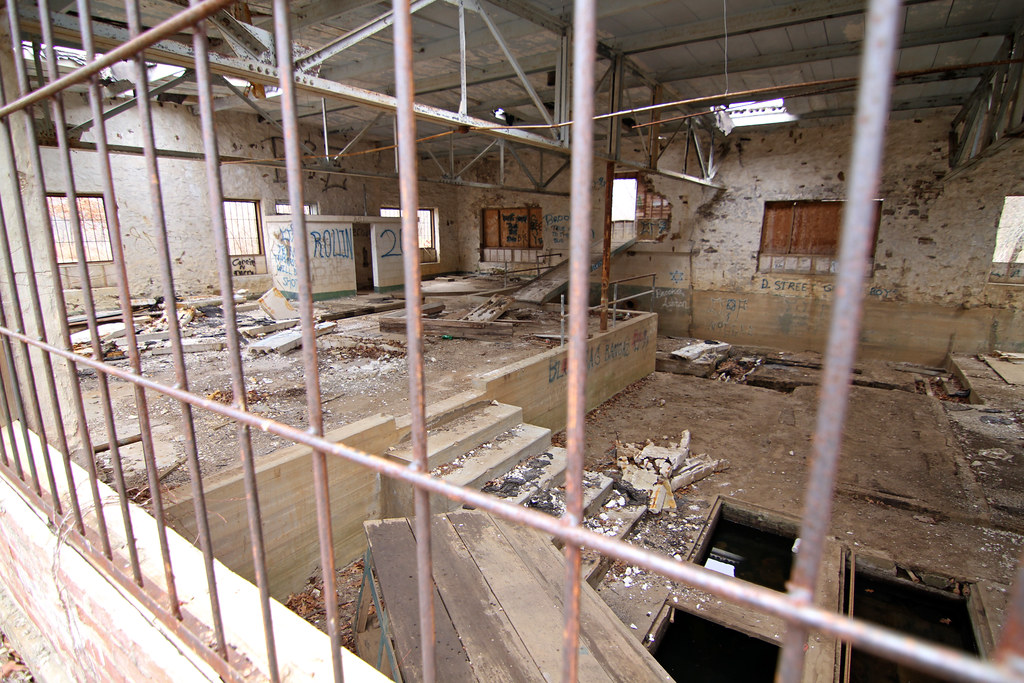
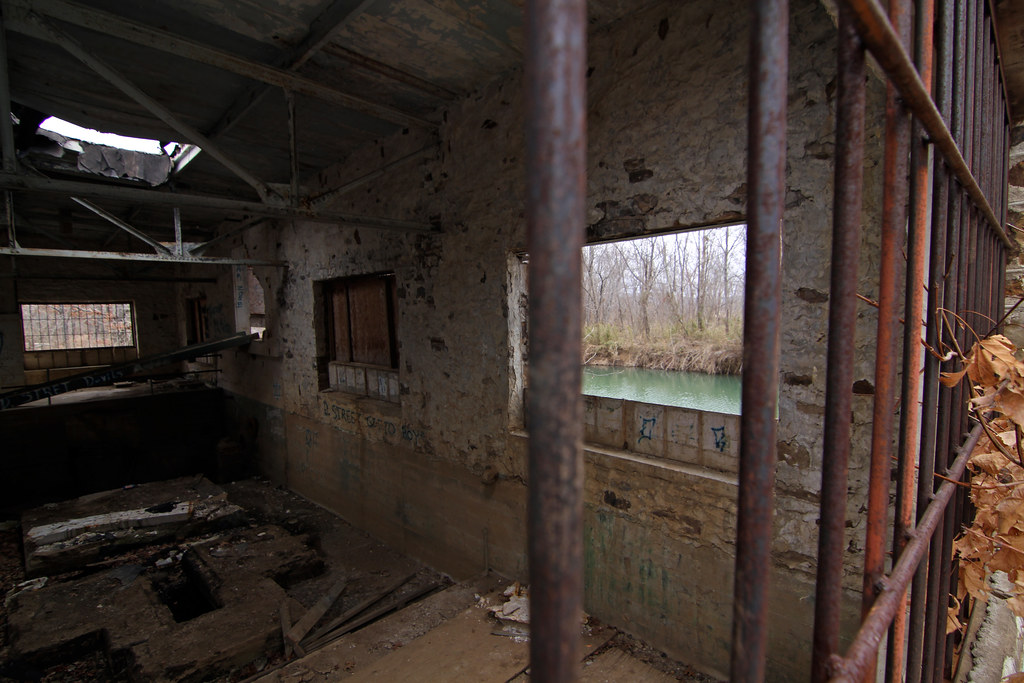
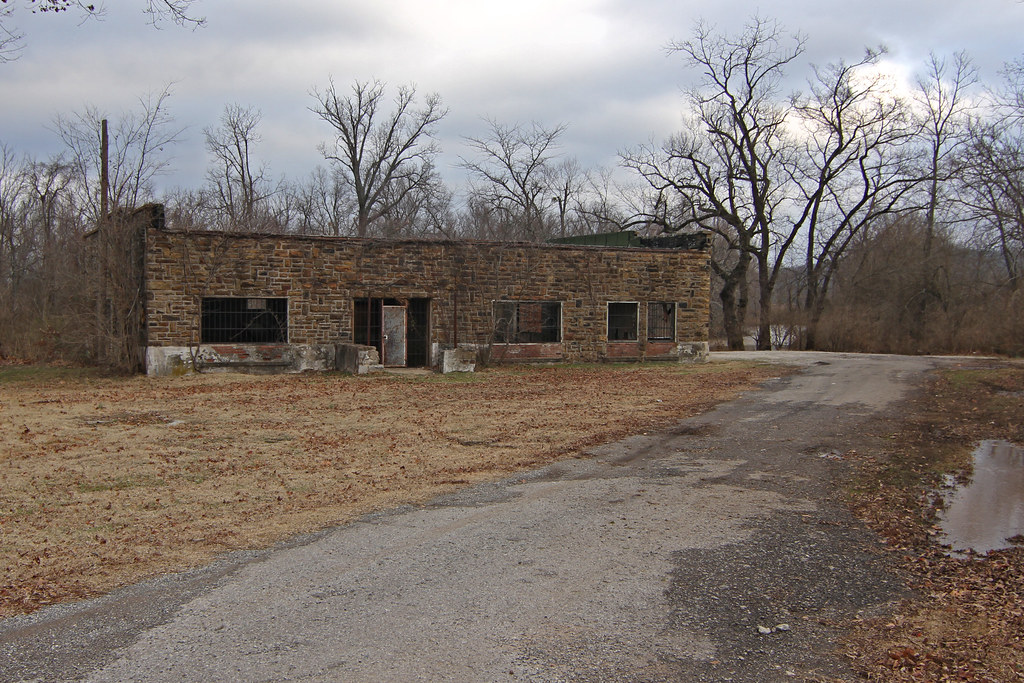
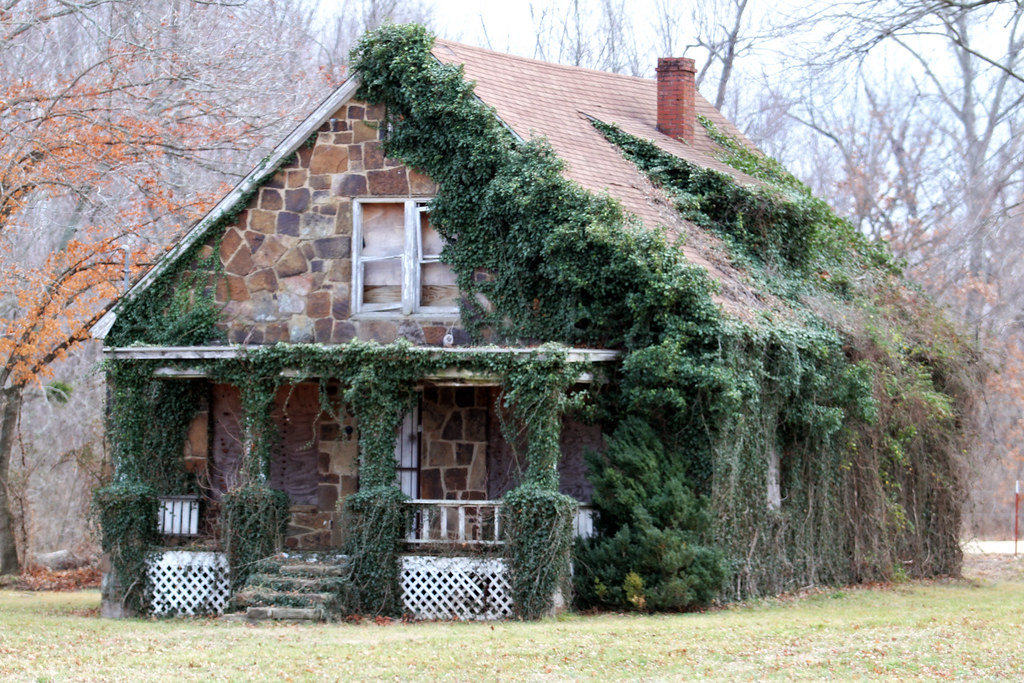
The old pump station house and caretaker’s cottage are located on Pump Station Road in southeast Fayetteville.
Photos by Todd Gill, Flyer staff
We ran a story last week about the cleanup of a former electroplating site on Pump Station Road in southeast Fayetteville.
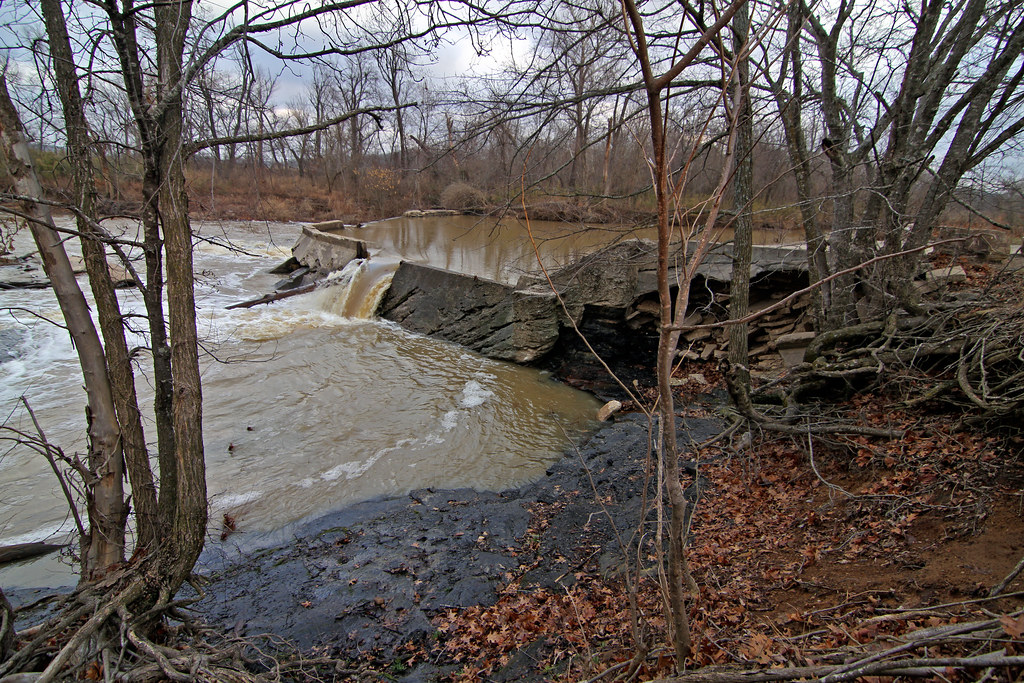
The property, located directly adjacent to the Pump Station Dam on the West Fork of the White River, will eventually become public parkland.
Since the story was posted, we’ve received several inquiries about the condition of the pump station house and nearby caretaker’s cottage.
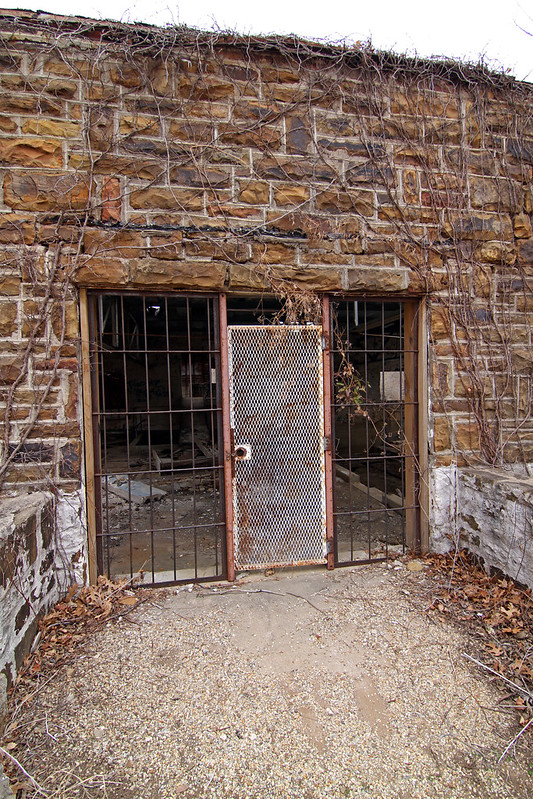
The buildings are still standing, but the doors are boarded up and the windows have bars on them. Those responsible for the graffiti in the pump station house likely entered from a rear window using a makeshift ladder propped up against the outside wall.
A sign out front offers a description of the property:
This area is known as the Pump Station Dam because of its function as an early drinking water reservoir for the City of Fayetteville. The dam was constructed in 1889 by a group of local businessmen and sold to the City of Fayetteville in 1907. The native stone Pump Station house and caretaker’s cottage were built in 1925. Water was pumped from here to Mt. Sequoyah, where it was filtered and stored before being gravity-fed to Fayetteville homes and businesses.
This small West Fork reservoir served as Fayetteville’s first municipal drinking water source, until the severe drought of 1907 caused the City to look for supplemental reservoirs on Clear Creek @ Lake Fayetteville and on the White River @ Lake Sequoyah, respectively. Northwest Arkansas’ current drinking water supply comes from the Beaver Lake Reservoir, which was created by an impoundment of the White River in 1969.
A watershed is simply defined as the geographical area within which all creeks, springs, and streams drain into a larger body of water. You are standing in the West Fork watershed right now!
The West Fork watershed originates in Winslow and passes through the communities of Brentwood, West Fork and Greenland before joining with the White River just below the spillway at Lake Sequoyah. From there, the combined rivers flow for 13 miles to the upper reaches of Beaver Reservoir, our drinking water supply.
Pump station house
Caretaker’s cottage
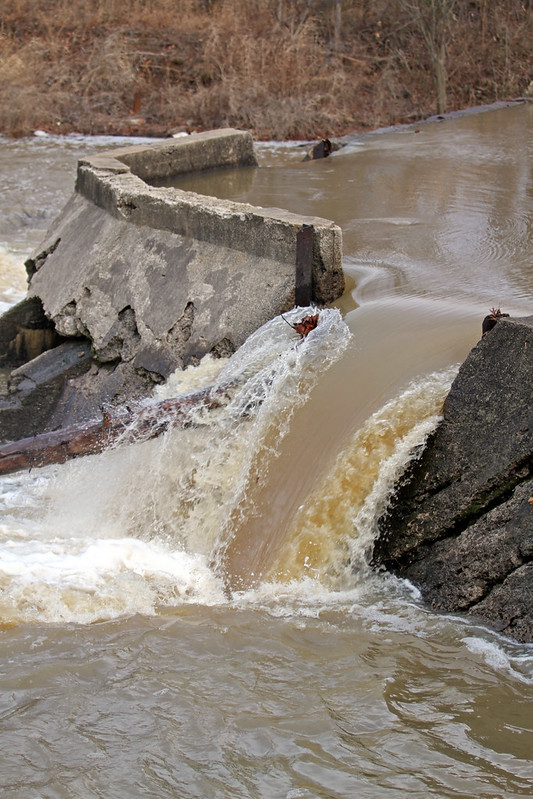
Pump station dam
Map
View Pump Station Dam area in a larger map


I love that Caretakers Cottage. Whimsical
Awesome! Thanks for posting these. I love abandoned buildings that are being slowly retaken by nature!
Blue Rag Bangaz aint nuttin to %#*& with!
Is there any talk of fixing these up for something? It would be a shame to see them bulldozed.
@Ray – I spoke with several city staff members about that and was told that neither structure is on anyone’s radar for future razing or renovation.
The city owns the place?
From the story above…
“The dam was constructed in 1889 by a group of local businessmen and sold to the City of Fayetteville in 1907.”
So yes, the city has owned it for roughly 106 years.
I’m sorry, I was referring to the cottage. The city has owned it since before it was built? Good to know!
I would expect that the city is the entity that built the pump house and the care taker’s cottage, and that they have retained ownership through the years.
I agree. It would be cool to be able to fix up those buildings and make a nice city park next to the river. Hopefully this will be put on someone’s radar.
Maybe a local developer could offer their services to rehab the structures in lieu of paying park land fees.
Loads of Native American artifacts were bulldozed when they rehabbed that area. The banks of the White River would be a great place to have a park which included some information about the prehistory of the area.
Haunting pictures, and kinda beautiful. Thanks for posting this. The building-to-water look is like our own Ruins of Monte Ne, in a way. I used to work down on Pump Station Road when we had Ozark Cooperative Warehouse in town. Good to get a glimpse online of the current condition of the old Pump Station itself.
Forgive me, as I’ve been out of Fayetteville for a while, but what happened to the Ozark Cooperative Warehouse?
Many years ago, after a major flood event the concrete in the gap(just to the left of the log) came out, creating a narrow gap for the water to flow through. This caused a beautiful compression-wave to form above the flat rock directly downstream which was really nice for kayakers and canoeists to surf on. We got about five months of play out of the spot before someone(the city?) went in and “fixed” the structure. At the time we were told that the industrial park would draw water from the small reservoir in case of a fire in the park, and the structure had to be fixed to raise the level of the reservoir so water would be there in case of emergency. I’m not sure if that was actually the case, but it was a really fun place to play. I miss having a quality play-spot that close to town.
And, by “left of the log”, I mean looking upstream. There is a large gap below the concrete that you see dividing the two spillways.
What an awesome part of history in NW Arkansas ! What a shame it has not been “restored” – would be a great site to visit – I KNOW it would require lots of dollars – but feel it would be worth it. Very sad to see this in such total deterioration !